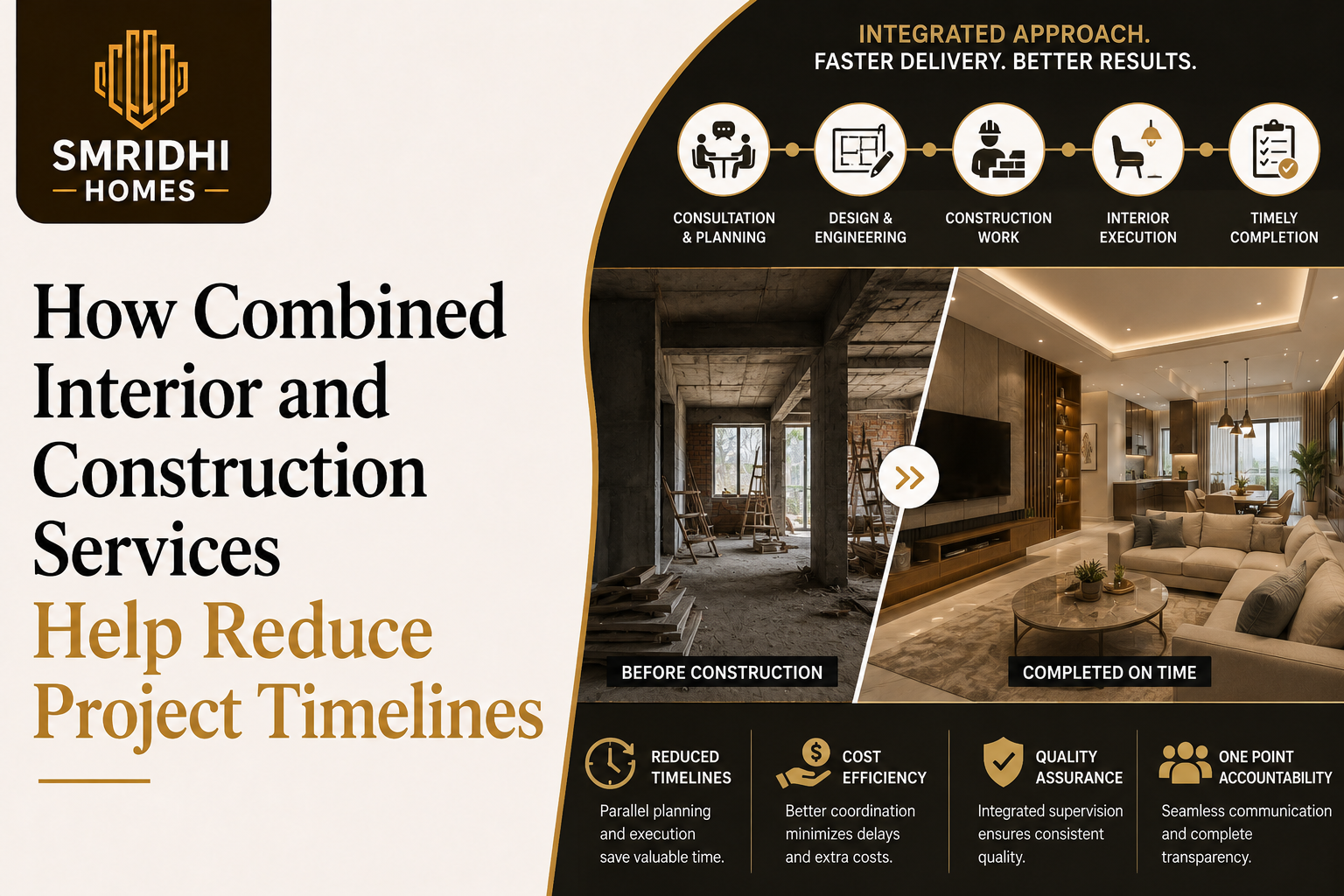
One of the most frustrating things about construction projects is the occurrence of delays. Homeowners may start off the process on a positive note; however, they soon find that coordination among the architect, the contractor, and the interior designer is a fragmented process, resulting in delayed decisions and processes extending much further than expected.
This is where Combined Interior and Construction Services has revolutionized the industry. Homeowners no longer have to coordinate with different vendors, but instead have a consolidated process of constructing and decorating right from the beginning.
Reasons Why Fragmented Construction Projects Lead to Delays
Construction projects usually have separate teams for the structure, electricity, plumbing, and interiors. Though each expert manages his own sphere of work, coordination remains the main issue.
This can result in:
- Changes in designs once the structure is constructed
- Material discrepancies
- Miscommunication between vendors
- Delay in approvals at every stage
In many cases, even a small design revision can delay the entire project timeline. This is exactly what Combined Interior and Construction Services eliminates by bringing all functions under one coordinated system.
With a unified approach, decisions are made faster, execution becomes smoother, and accountability remains centralized.
How Integrated Execution Improves Speed and Efficiency
One of the strongest advantages of Combined Interior and Construction Services is parallel execution. Instead of waiting for one phase to finish before starting the next, multiple stages move simultaneously.
For example:
- Interior planning starts during structural development
- Electrical layouts are finalized alongside architectural design
- Material selection happens early in the process
This reduces idle time and ensures that the project flows without interruption.
Key efficiency gains include:
- Reduced rework due to early coordination
- Faster procurement of materials
- Better labor scheduling
- Fewer on-site conflicts
When teams work as one unit, the project behaves like a streamlined production system rather than a disconnected sequence of tasks.
Cost Control and Quality Benefits of a Unified System
Beyond time savings, Combined Interior and Construction Services also play a major role in controlling costs and improving quality outcomes.
When different vendors manage separate budgets, cost overruns become common due to:
- Duplicate material orders
- Unplanned design modifications
- Inefficient resource usage
An integrated system avoids these issues through centralized budgeting and procurement.
Expert Recommendation:
Industry professionals often recommend integrated services because they ensure:
- Standardized material quality across all stages
- Bulk purchasing advantages
- Reduced wastage and rework costs
- Clear accountability for budget management
From a quality perspective, alignment between construction and interior teams ensures design consistency. Walls, lighting, furniture layouts, and finishes are planned together rather than adjusted later.
This creates a more cohesive and refined final output.
Why Homeowners Prefer Single-Point Responsibility Models
One of the biggest decision-making factors for homeowners is simplicity. Managing multiple contractors is not only time-consuming but also stressful.
With Combined Interior and Construction Services, homeowners interact with a single point of contact responsible for the entire project.
This model provides:
- Clear communication channels
- Faster approvals and decision-making
- Reduced dependency on multiple vendors
- Strong accountability for deadlines
Instead of resolving conflicts between teams, the homeowner focuses only on design preferences and progress updates.
This shift has made integrated services especially popular among working professionals and NRIs who cannot actively manage day-to-day construction activities.
Technology, Planning, and Modern Construction Integration
Modern construction is no longer just about building structures. It is about creating efficient, technology-enabled living spaces.
Combined Interior and Construction Services increasingly rely on digital planning tools such as:
- 3D design visualization
- BIM-based coordination
- Virtual walkthroughs
- Digital project tracking systems
These tools help identify design conflicts before construction begins, significantly reducing on-site issues.
Real-World Example:
A lighting layout conflict with ceiling design can be resolved in the planning phase itself instead of after installation. This alone can save weeks of delay.
Additionally, integrating interiors early ensures that space optimization, storage planning, and furniture placement align perfectly with structural design.
How to Decide If Integrated Services Are Right for You
Choosing between traditional and integrated construction depends on project complexity, budget, and personal involvement.
You should consider Combined Interior and Construction Services if:
- You want faster project completion
- You prefer reduced coordination stress
- You are building a custom or premium home
- You are not able to supervise daily progress
However, if you prefer handling each vendor separately or want full control over every stage, a traditional approach may still be suitable.
Decision-Making Guidance:
Before finalizing, evaluate:
- Experience of the service provider
- Portfolio of completed projects
- Transparency in cost structure
- Ability to handle both design and execution
The quality of integration matters more than the model itself.
Final Thoughts
Construction delays, budget overruns, and coordination issues are often the result of fragmented project management. Combined Interior and Construction Services solve these challenges by creating a unified system where design, construction, and interiors work together from the beginning.
This approach not only saves time but also improves quality, reduces stress, and ensures better financial control. For homeowners seeking a seamless experience with professional execution, integrated services offer a practical and modern solution.
Companies like Smridhi Homes demonstrate how structured coordination between construction and interiors can deliver efficient timelines, consistent quality, and a more refined living experience—making the entire home-building journey smoother and more reliable.